
“Say you have seen an ordinary bit of what is real, the infinite fabric of time that eternity shoots through, and time’s soft-skinned people working and dying under slowly shifting stars. Then what?”
–Annie Dillard, “This Is the Life”
“Say you have seen an ordinary bit of what is real, the infinite fabric of time that eternity shoots through, and time’s soft-skinned people working and dying under slowly shifting stars. Then what?”
–Annie Dillard, “This Is the Life”
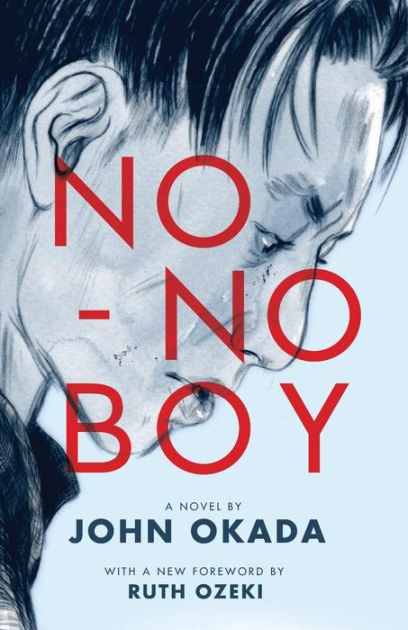
My latest post on WritingtheNorthwest.com is about John Okada’s NO-NO-BOY, the most beautiful and devastating novel I’ve read about the American immigrant experience.
The book’s focus is the difficult return to Seattle of a young Japanese American man who went to prison rather than serve in the US military during WWII: the hostilities he faces, the kindnesses he can’t bear, and his own feelings of guilt and shame.
Click below to read my thoughts on this amazing and eye-opening book.

Head over to WritingtheNorthwest.com to read about (and watch!) the fascinating video work of Indigenous artist Sky Hopinka, who was raised in Ferndale, WA, and went to school at Portland State University.
Hopinka is one of this year’s MacArthur fellowship winners. His evocations of Indigenous culture in the Northwest subvert traditional views with fresh and sometimes disorienting approaches.
A new post on WritingtheNorthwest.com looks at the tragic slaughter caused by the late-19th C fashion trend of women wearing feathers and even whole birds on their hats.
Focused on Oregon’s beautiful Malheur wildlife refuge, the post is titled, “How a Fashion Trend Led to an Eastern Oregon Bloodbath–and How It Was Stopped.”


You can read it here: https://writingthenorthwest.com/?p=753

As part of my J. D. Ross research, I’ve been reading FDR’s May 26, 1940, fireside chat titled “On National Defense.” After making a pitch for beefing up the military in response to what was happening in Europe, he said this:
” But there is an added technique for weakening a nation at its very roots, for disrupting the entire pattern of life of a people. And it is important that we understand it.
“The method is simple. It is, first, discord, a dissemination of discord. A group –not too large — a group that may be sectional or racial or political — is encouraged to exploit its prejudices through false slogans and emotional appeals. The aim of those who deliberately egg on these groups is to create confusion of counsel, public indecision, political paralysis and eventually, a state of panic.”
The result, he said, is that people “can lose confidence in each other, and therefore lose confidence in the efficacy of their own united action. Faith and courage can yield to doubt and fear. The unity of the state can be so sapped that its strength is destroyed.”
These are important words to remember, especially as we prepare to go to the polls for an important midterm election.

I just posted a new piece on WritingtheNorthwest.com. It’s about a 1917 profile of Portland, Oregon, in the national magazine Collier’s Weekly. Called “Portland the Spinster,” the article suggests the city is run by a handful of conservative FFPs (First Families of Portland) who lord it over the later arrivals.
I love reading other people’s views of places I love, and I had some fun writing about this one. You’ll find my post here.

I haven’t been publishing a lot lately, but a piece I wrote called “The Ethics of Writing About Others” just appeared in The Writer’s Chronicle.
I thought it was going to be behind a paywall, but the WC editors have made it available to anyone. Here’s an excerpt:
One of the trickiest things to do is balance what you feel is true after all of your research with fidelity to what you actually know. Given that a biography is usually based on years of research and a memoir on years of knowing the people around you, it is easy to believe you know what your subject’s perspective on something would be even if she never stated it. The danger in this is we never truly know what a person might have thought or felt. People surprise us all the time. We even surprise ourselves.
You can read the full essay here.
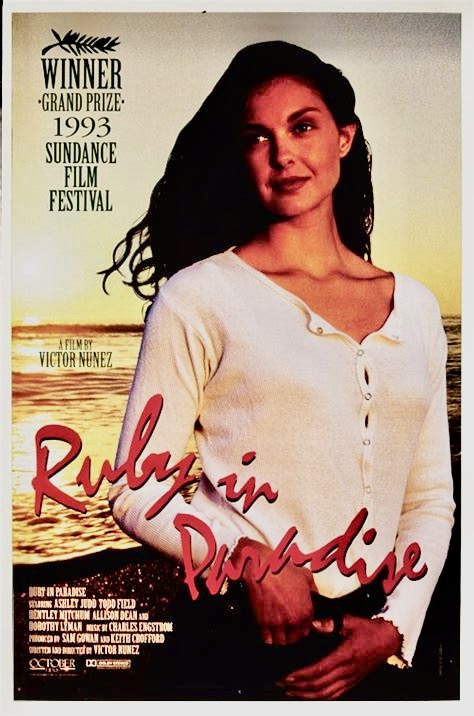
The other night my wife and I re-watched “Ruby in Paradise,” the 1993 Victor Nunez film starring a 25-year-old Ashley Judd. We didn’t remember anything about the movie except that we’d like it the first time. And we liked it just as much this time.
What struck me most about the story of a naive woman who leaves her backwoods Tennessee home to make a new life on the Florida shore is how much the writer and director trust the characters and situation to develop and carry the story’s conflict and emotional weight.
There’s one incident of sexual harassment and Judd’s Ruby has consensual sex, but otherwise the movie is refreshingly free of the violence that substitutes for conflict, gratuitous sex that takes the place of emotional content, and addiction that stands in for personal peril in movie after movie, TV show after TV show, and even book after book today.
The movie is also free of the shallow values and empty ambitions of so much “entertainment” today, in which glitz and power seem to be the only things anyone desires anymore.
As a result, the viewer is able to invest emotionally in the hardships and triumphs of a young woman with modest ambitions trying to become her own woman in a world where that isn’t easy.
The movie is available on Prime Video right now.

For many years, Sylvia and I have been spending part of each summer in the San Juan Islands, on land her parents bought back in the 1960s. We just returned from our latest sojourn there. The land contains two small cabins, one of which began as her family’s tent platform and I use now as a writing studio, which sounds much loftier than the space deserves.
The cabin land is what they call high-bank waterfront, which means there’s a beach below but it’s a long ways down. The cabins are nestled into a forest of mostly Douglas-firs and grand firs, with a sprinkling of lodgepole pine, hemlock, and alder. There are other cabins nearby, but only one that is close and it is generally vacant except in the summer.
When we’re on the island, we live a simple life close to nature, with eagles, kingfishers, and Great Blue herons winging by, seals and otters splashing in the waves, and deer grazing on the oceanspray. Although there is a village on the island, we rarely go there. When we do, it feels as if we’re reentering civilization. But of course we use the internet to stay connected from the cabins.
I mention all of this now because I recently completed a memoir about the time Sylvia and I spent a full year up there, during a sabbatical from teaching at Portland State University.
It was a tumultuous year during which my mother died, Sylvia’s mother faded into the fog of Alzheimer’s, and we faced a series of hardships on and off the island. It was also a transformative year, in which the hardships themselves gave me new vision and strength.
I’m in the process of looking for a publisher for the book now and thinking I might post short selections from it in the weeks ahead, as well as some of the pictures I’ve taken of island life.
For now, here are a couple more shots from this summer:


The latest post on WritingtheNorthwest.com, my new website dedicated to writing about the Pacific Northwest, is my review of a strange new novel from the always-interesting Portland author Peter Rock. Here’s a part of the review:
In his last two novels—2019’s The Night Swimmers and this year’s Passersthrough (both published by Soho Press)—Rock has used a spare, allusive style to focus closely on a small number of characters in a limited situation while suggesting that there is more going on around them than they or the reader can know, some of it possibly supernatural.
This approach can create a feeling of disorientation, a sense that you’re not understanding something important to the story. But if you release your mind from the need to be certain of everything at every moment, the mood and mystery can take over, allowing you to immerse yourself in Rock’s precise and often beautiful evocations of places, experiences, and sensations.
You can read the whole review here.