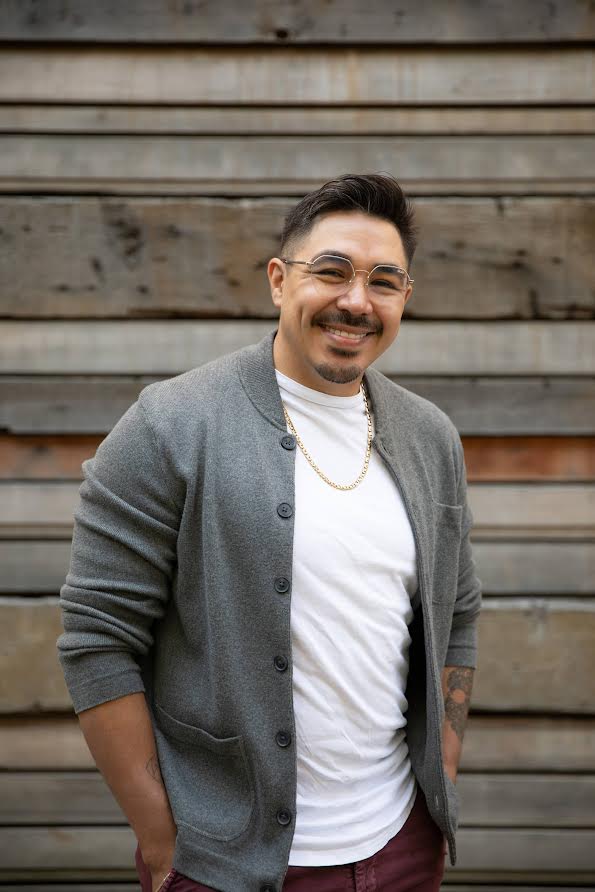
I’m thrilled to feature novelist and Pulitzer-Prize-winning nonfiction writer Mitchell S. Jackson in the newest WritingtheNorthwest.com post. Mitchell is one of the most exciting writers to come out of the NW in recent years.
Read his answers to “Three Questions and a Quote” here.
I just posted a review on WritingtheNorthwest.com of a unique book by a promising young poet named Ricardo Ruiz. The poems in it come out of interviews with migrant workers in Eastern Washington.
Together with brief bios of the interviewees, the poems present a full and sympathetic look at this hopeful but struggling and tragically neglected community.
Here’s how the post begins:
I never know where or how I’m going to come across good writing about the Pacific Northwest. A couple of weeks ago, for example, I was walking through the book fair at the Associated Writers and Writing Programs conference in Seattle when I found myself in conversation with a young man who had just published his first book of poetry, titled We Had Our Reasons. I asked him to tell me about it and liked both his subject–the lives of migrant workers–and his demeanor, so I bought a copy.
It was only when the writer, Ricardo Ruiz, had signed the book that I noticed the workers he wrote about lived in Eastern Washington. He had already told me his book was really a collaborative effort. He had interviewed workers of Mexican descent and fashioned poetry in different forms and voices from what they told him. Some were legal immigrants, some were undocumented, some had been born in the United States, and one was an Immigration and Customs Enforcement agent.
It wasn’t until I was on the bus home and read the first few pages that I realized what a treasure his book is. In verse that has the accessibility of a Billy Collins or Mary Oliver but channels a very different world, Ruiz presents the struggles, hopes, and sometimes dangerous experiences of a group of people for whom the United States is both tentative home and too-often-tarnished dream.
Note: I am an affiliate of Bookshop.org, where your purchases support local bookstores. If you buy a book through a click on this website, I will earn a small commission that helps defray the costs of maintainingthis website.
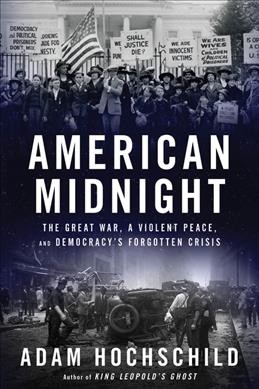
My new post on WritingtheNorthwest.com looks at the many Pacific Northwest connections in Adam Hochschild’s fascinating and sobering new book about America during and after World War I, AMERICAN MIDNIGHT.
Among the Northwest people you’ll read about are the feisty, progressive Portland doctor Marie Equi, the organizers of the 1919 Seattle General Strike, and the brave members of the International Workers of the World (Wobblies) labor union.
You’ll also read about less savory characters like the immigrant-hating Washington State congressman Albert Johnson and Seattle mayor Ole Hanson, who may have been the first politician to make a career out of being avowedly anti-Communist.
Note: I am an affiliate of Bookshop.org, where your purchases support local bookstores. If you purchase a book through a click on this website, I will earn a small commission that helps defray the costs of maintaining this website.
The latest post on WritingtheNorthwest.com, my new website dedicated to writing about the Pacific Northwest, is my review of a strange new novel from the always-interesting Portland author Peter Rock. Here’s a part of the review:
In his last two novels—2019’s The Night Swimmers and this year’s Passersthrough (both published by Soho Press)—Rock has used a spare, allusive style to focus closely on a small number of characters in a limited situation while suggesting that there is more going on around them than they or the reader can know, some of it possibly supernatural.
This approach can create a feeling of disorientation, a sense that you’re not understanding something important to the story. But if you release your mind from the need to be certain of everything at every moment, the mood and mystery can take over, allowing you to immerse yourself in Rock’s precise and often beautiful evocations of places, experiences, and sensations.
Used to monitor number of Google Analytics server requests
10 minutes
__utmb
Used to distinguish new sessions and visits. This cookie is set when the GA.js javascript library is loaded and there is no existing __utmb cookie. The cookie is updated every time data is sent to the Google Analytics server.
30 minutes after last activity
__utmc
Used only with old Urchin versions of Google Analytics and not with GA.js. Was used to distinguish between new sessions and visits at the end of a session.
End of session (browser)
__utmz
Contains information about the traffic source or campaign that directed user to the website. The cookie is set when the GA.js javascript is loaded and updated when data is sent to the Google Anaytics server
6 months after last activity
__utmv
Contains custom information set by the web developer via the _setCustomVar method in Google Analytics. This cookie is updated every time new data is sent to the Google Analytics server.
2 years after last activity
__utmx
Used to determine whether a user is included in an A / B or Multivariate test.
18 months
_ga
ID used to identify users
2 years
_gali
Used by Google Analytics to determine which links on a page are being clicked
30 seconds
_ga_
ID used to identify users
2 years
_gid
ID used to identify users for 24 hours after last activity
24 hours
_gat
Used to monitor number of Google Analytics server requests when using Google Tag Manager
1 minute
_gac_
Contains information related to marketing campaigns of the user. These are shared with Google AdWords / Google Ads when the Google Ads and Google Analytics accounts are linked together.