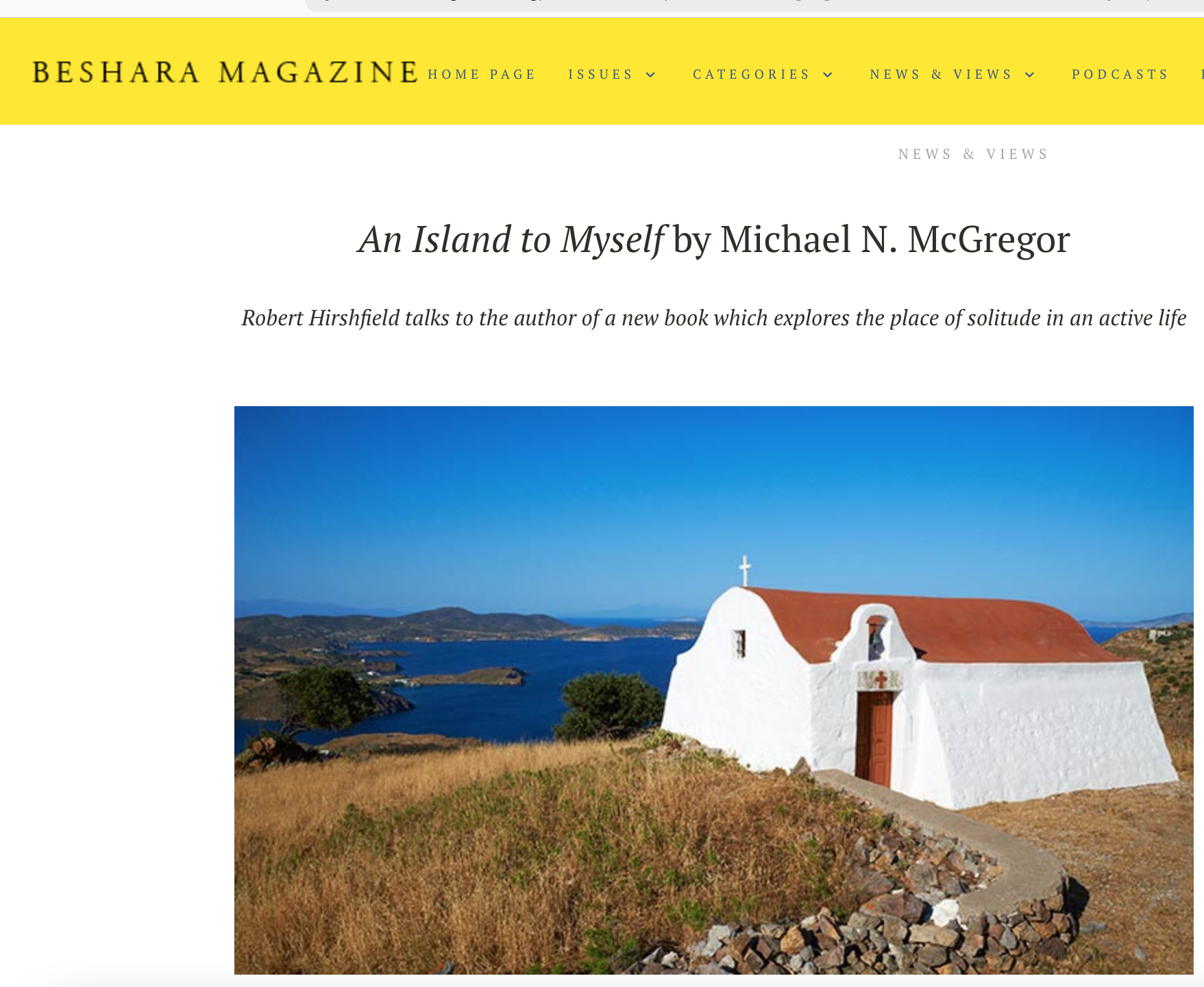
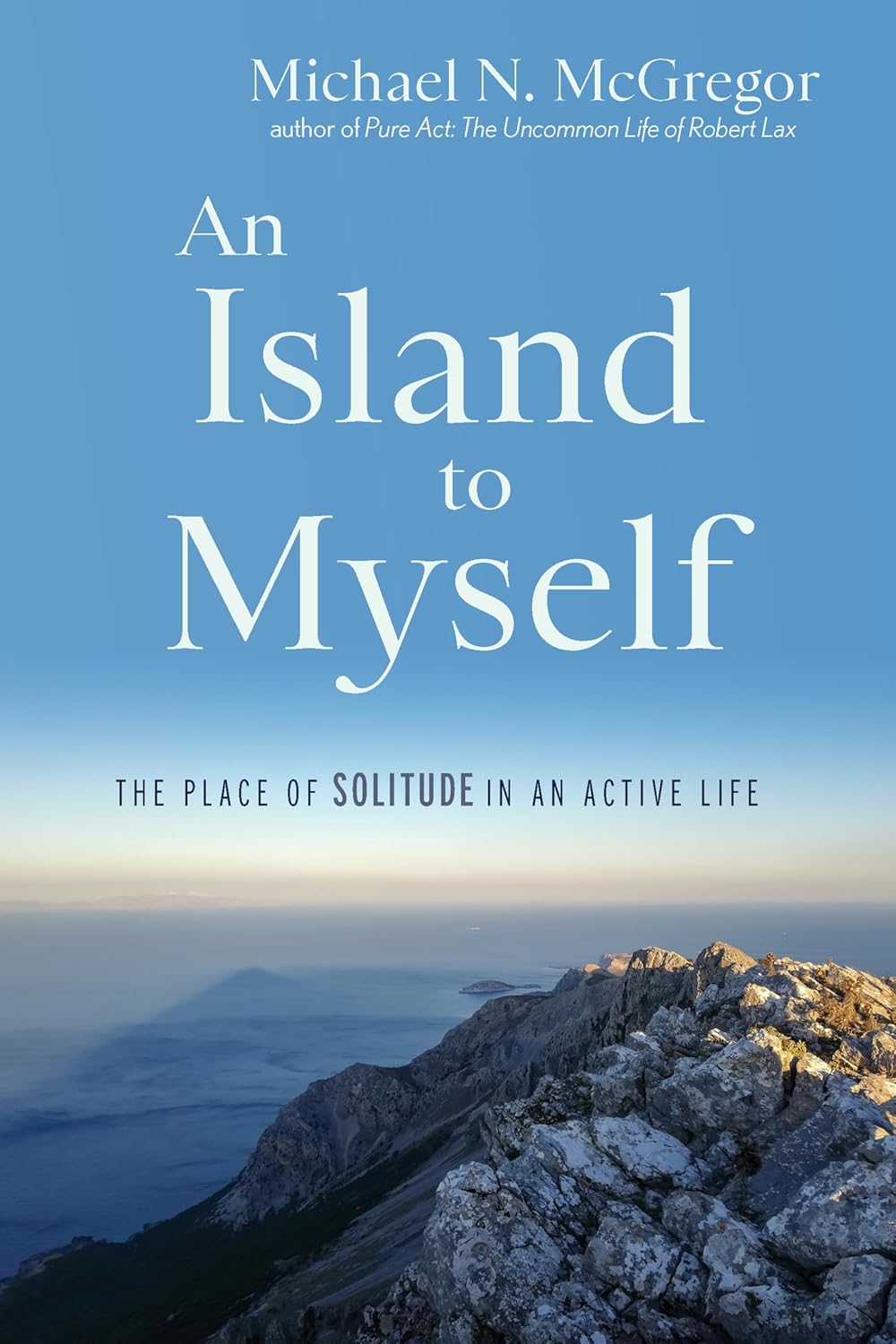
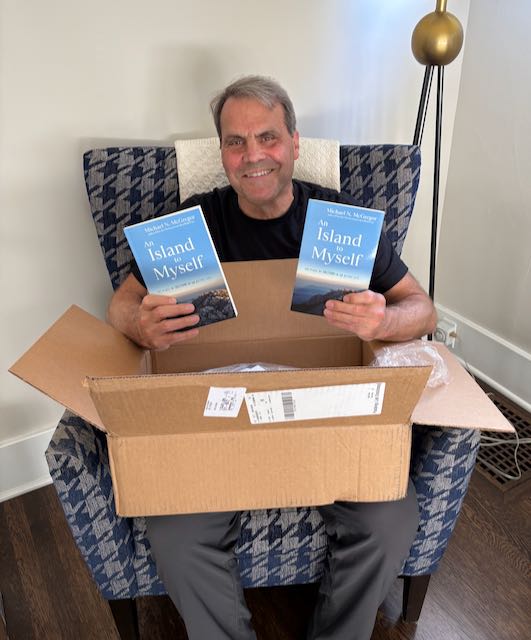
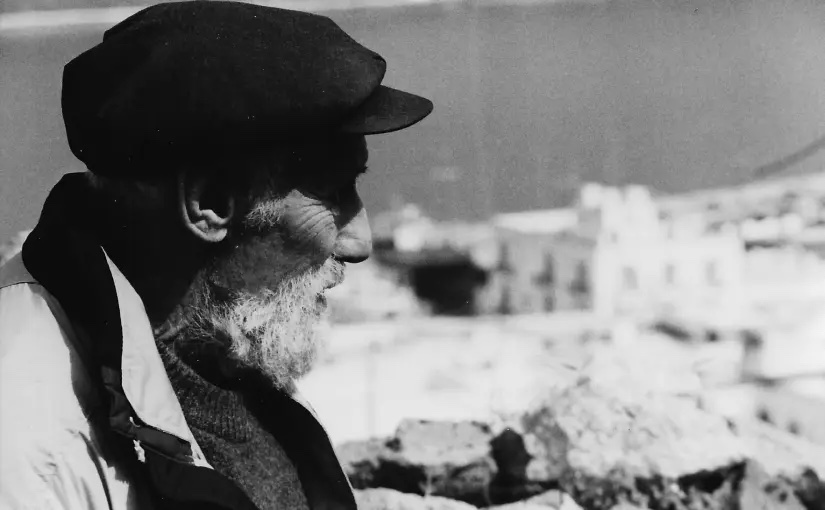
Haiku poet Robert Hirschfield praises An Island to Myself: The Place of Solitude in an Active Life and offers snippets from an interview with me in a piece just published online in Beshara, a UK magazine devoted to “Unity in the Contemporary World.”
Hirschfield begins with a quote from the book: “Solitude doesn’t give me meaning so much as help me see where my life has meaning and where it doesn’t.” Then he writes: “I go over that line maybe three or four times, as if afraid it may otherwise disappear for good.”
He credits me with “a knack…of getting at what is most essential and quietly moving on” before quoting these lines of mine from our interview:
“It seems obvious to me that in our very busy, very noisy world, just giving yourself a break from that would have to be beneficial. Beyond that, to live a life is to experience the unknown. I think solitude allows you to exist in that unknowing state, to realize a true vision of who you are and what it means to be alive.”
The interview touches on the relationship of solitude to several subjects, including nature, travel, and loneliness.
A few weeks ago, I did a interview on Talk Radio Europe about my new book, An Island to Myself: The Place of Solitude in an Active Life. To prepare for it, I wrote out some ‘talking points.’ I thought they might be useful to those thinking of buying or recommending the book, so here they are.
1. The book is mostly a memoir, centered in my experience living alone on the island of Patmos in Greece 40 years ago, when there were no cellphones, laptops or internet, and a phone call was absurdly expensive. I was 6,000 miles from home, in the middle of winter, on a remote island where I knew no one. The experience changed me.
2. Being alone for that long as a young man gave me a chance to know myself on a deeper level, to learn that our potential is much greater than we think, and to believe for the first time that I was a writer. A creative writer.
3. In this age when we are assaulted by opinions, ads and media from all directions, solitude is more necessary than ever. It gives you a rest from the noise and confusion and allows you to get to know yourself—your thoughts, opinions and beliefs—without the pressure of other people’s views.
4. Solitude can start with something as simple as turning off the notifications on your smart phone or taking the ear buds out of your ears and being alive to the world around you.
5. Among the places I’ve found solitude are libraries, trains, parks, a forest, a retreat center, and even with my mother in a small park near the care facility she lived in at the end of her life.
6. The book talks about solitude in relation to creativity, grief, overwork, spiritual contemplation, appreciation of nature, and the need simply for rest.
7. Much of the book is set in Europe because it is about the dozen years I led tours throughout Europe, including Spain and Portugal, Greece and Turkey, and, in the days just after the Berlin Wall fell, some of the first trips by Westerners into Eastern Europe.
8. At its core, it’s one man’s story of how solitude has affected his life over decades, with quotes from writers, thinkers, and spiritual figures—and tips along the way for benefiting from solitude yourself.
9. It includes the harder parts of solitude too, including the threat of loneliness and the fact that when you isolate yourself and reflect on your life some of the things that come to you will be uncomfortable. In solitude you have the time and space to work through those things.
10. Solitude vs. loneliness. I think solitude is actually an antidote to loneliness. Loneliness comes when we measure ourselves against society’s expectations—or our perceptions of society’s expectations. In choosing solitude, you’re also choosing to let go of those expectations and find out what your real interests, beliefs, and desires are. When you return to the world, you can pursue these truer interests instead of listening to others’ agendas for you and the world.
11. One thing it’s important to stress is that solitude is never for yourself only. It’s always for others too. By taking time to be alone, you find rest and you learn more about yourself. This allows you to return to the company of others fully alive, fully yourself, with something unique to offer. You can cut through the superficiality that tends to dominate our social lives.
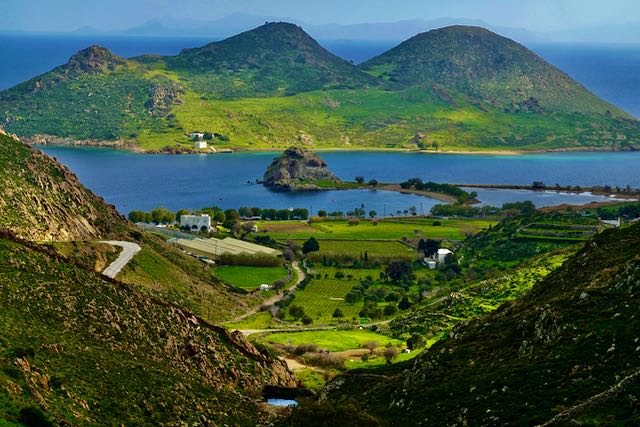
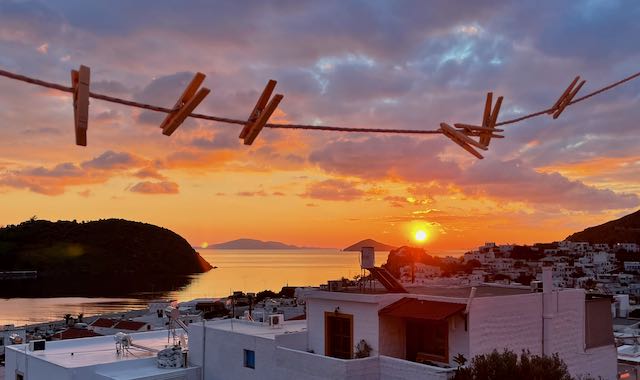
12. The book is a bit of a travelogue too. The reader journeys along with me to this beautiful island in the Aegean, sees the land and the sea, and meets some of the Greek islanders who treated me with such love and care.
13. You don’t need to go to a Greek island to reap the benefits of solitude. You can do it in a closet in your home or a nearby park or a library—anywhere you can find a quiet space in which to spend time away from others and your usual life. You can even do it among others if you maintain your quiet while walking or running or biking through the world.
14. Solitude teaches you to slow down, be patient, and pay attention to the world around you as well as the one inside you. It opens you up to things you haven’t had time to notice, including spiritual dimensions of life.
Note: I’m an affiliate of Bookshop.org, where your purchases support local bookstores. If you buy a book through a click on this website, I’ll earn a small commission that helps defray the costs of maintaining MichaelNMcGregor.com.
“In this inspiring and hope-filled journey into the heart of solitude, McGregor takes us to the hinterlands of grace, and in the healing silence of a still heart and mind, we discover the antidote to a loneliness that plagues many of us these days, fed by consumption, competition, and a tendency to commodify relationships.”
—Patrick Hannon, author of Sacrament: Personal Encounters with Memories, Wounds, Dreams, and Unruly Hearts
“To dwell in solitude without feeling lonely, one must be open to a presence that’s inaccessible in the midst of even the dearest human companions. In search of that elusive presence, Michael N. McGregor has repeatedly taken leave from loved ones and workaday tasks, seeking stillness in a library, a park, a rustic cabin, a borrowed apartment, a Greek island, and other retreats. Over the course of decades, from restless youth to grateful elder, he has gathered insights into his character, his values, his past and possible futures. By accompanying him in his search, we may be inspired to undertake solitary sojourns of our own.”
—Scott Russell Sanders, author of The Way of Imagination
“Solitude is one of the most misunderstood words in the English language. Many of us would prefer to avoid being alone. But when we allow solitude to take us by the hand, we realize it is a guide, a doorway we step through to discover the most consequential person in our life: our self. As we follow along in this page-turner of a book—from the Greek island of Patmos to the San Juan Islands, Whidbey Island, and a myriad of other places McGregor has experienced solitude—we start to understand that being still is also a way to keep moving, to keep going deeper into the discovery of our true purpose and being.”
—Judith Valente, former faith and values correspondent for PBS-TV, author of The Art of Pausing and How to Be
“I finished An Island to Myself within the whirlwind of my screen-mediated over-extended life, one where my harried attention leaps quickly here then there and back again. Yet McGregor’s book is not finished with me. Its steady openhearted questions about fulfillment, gratitude, beauty, love, and meaning still call to me from within. His patient and humble account of the difficulties and rewards of seeking solitude, not in order to be alone and separate, but ultimately to love and connect more fully and more deeply with life, is one I won’t soon forget.”
—David Naimon, co-author of Ursula K. Le Guin: Conversations On Writing, and host of the radio show and podcast, Between The Covers
“Michael N. McGregor’s forty-year courtship of solitude is exacting, frank about the paradoxes of the journey, utterly determined to see his investigation through, and faithful to a helpful decision to include the journey’s contradictions. Bolstered by a counterpoint of epigraphs on solitude ranging from Wordsworth to Einstein, Epictetus to Proust, Anne Frank to Susan Sontag, Joan Didion to Rumi, Franz Kafka to bell hooks, and more, journey’s end brings McGregor to conclusions that are thoroughly flight-tested, uniquely his own, and invaluable to lovers of solitude counter-balanced with active lives.”
—David James Duncan, author of The Brothers K and Sun House
“Michael N. McGregor’s musing memoir An Island to Myself is about using the practice of solitude to develop personal authenticity and enhanced creativity … about a transformative search for meaning among the small, often overlooked everyday moments.”
My second book to come out in 2025, An Island to Myself: The Place of Solitude in an Active Life, makes its debut today! This is an especially personal book for me, a memoir about the important ways solitude has affected me and sustained me through the past 40 years.
An Island to Myself begins with the two months I spent in almost total solitude on the island of Patmos 40 years ago, a time that changed my life. It continues with shorter chapters on my later encounters with solitude on other islands, in nature, in libraries, in a retreat center, and in a small park with my mother at the end of her life. Along the way, it offers quotes from writers and spiritual leaders as well as my thoughts on what periods of solitude can offer to all who live active lives. Its last section follows me as I return to Patmos to spend two weeks in solitude as an older man, exploring how my views of the island, solitude, and myself have changed.
For those in the Seattle area, we’ll be celebrating the book’s release with an event at Third Place Books in the Ravenna District (6504 20th Ave. NE) at 7 p.m. tonight.
Other events are scheduled over the coming weeks and months on Bainbridge Island (this Thursday at 6:30 at Eagle Harbor Book Co.) and in Portland, Minneapolis, Denver, Bellingham, Boston, and New York.
In a pre-publication review, Kristine Morris of Foreword Reviews called An Island to Myself “a musing memoir…about using the practice of solitude to develop personal authenticity and enhanced creativity” and “a satisfying memoir about a transformative search for meaning among the small, often overlooked everyday moments.”
Patrick Hannon, priest, professor, and author of Sacrament: Personal Encounters with Memories, Wounds, Dreams, and Unruly Hearts, describes the book this way:
“In this inspiring and hope-filled journey into the heart of solitude, McGregor takes us to the hinterlands of grace, and in the healing silence of a still heart and mind, we discover the antidote to a loneliness that plagues many of us these days, fed by consumption, competition, and a tendency to commodify relationships.”
Here’s a quote from the book’s first section:
I’m learning again and again in my time alone that solitude is never for yourself only. It is always also for others. By taking this time to learn about myself, quiet the voices inside and out, and elevate awareness of what’s more truly in me and around me, I unleash energy and understanding that will emanate from my words and actions wherever I go. (p. 38)
An Island to Myself: The Place of Solitude in an Active Life is available at independent bookstores everywhere and, in the U.S., online at the following sites:
I just sent out the Spring 2024 issue of The Robert Lax Newsletter, a free quarterly publication with news about Lax-related events, articles, quotes, and images. This issue of the newsletter includes a feature article about Lax in winter, news about my forthcoming book on solitude, a YouTube video featuring author Steve Georgiou talking about his friendship with Lax, numerous images of Lax poems and publications, a hilarious Reddit string about a Lax poem, and many other delights.
Here’s a brief excerpt from the feature article on Lax in winter:
Two months have passed since I returned from my two weeks in Lax’s old house on Patmos, and I’m still thinking about what it was like for him living there in winter and then spring. In many ways, winter is the most beautiful time of the year on Patmos, especially when the sun is out. The fields are green, the wind whips the waves into beautiful patterns, and the island is quiet, with none of the hecticness that comes with the summer tourists.
But the wind is ever-present too, and it can be fierce. Lax’s house, like most on Patmos, is mostly concrete and holds the moisture as well as the cold. When I visited him in winter, he was usually wearing long underwear and a knit cap, and he spent much of his time on his bed, often with blankets over him. His only contact with the world beyond the grocery store, the post office, and a neighbor or two, was the half-hour each night he listened to news from the BBC...
Thousands of readers have already viewed the Spring 2024 issue of a newsletter that has been published since 2015. To be one of them, sign up here.
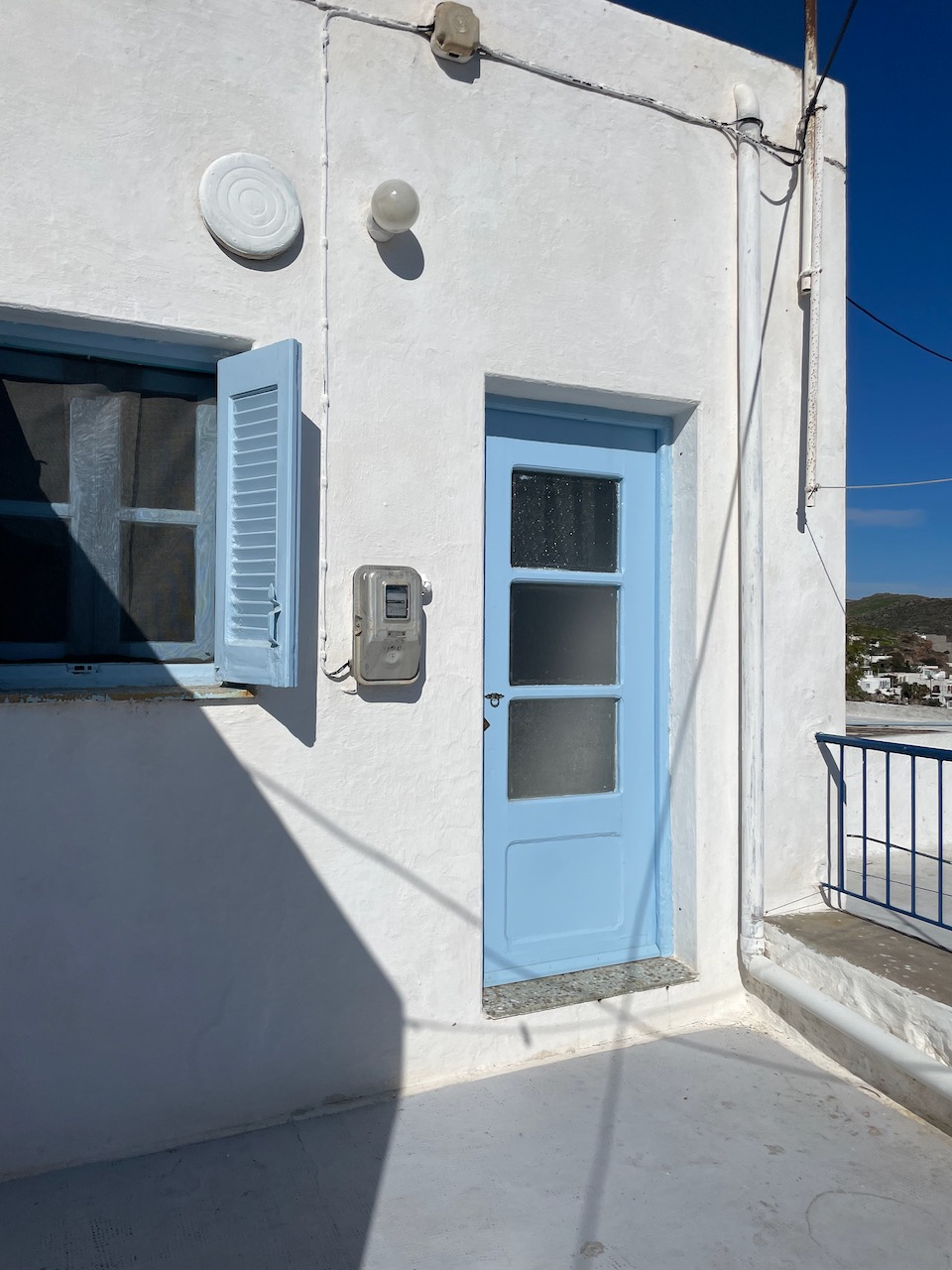
The front door of Robert Lax’s house on Patmos, 2024. (Photo by Michael N. McGregor)
In late January and early February, I spent two weeks living in Robert Lax’s old house on Patmos while doing research for my forthcoming book An Island to Myself: The Place of Solitude in an Active Life (Monkfish Publishing, spring 2025).
I’ll be posting more about the book and my experiences in writing it in coming days, but for a taste of it now, you can go to robertlax.com and read about my thoughts while looking over the only reminders of Lax still in his house: his books.
When it rains, it pours. I’ve signed another contract, this one for a book on solitude to be published by Monkfish Publishing in the spring of 2025. The title is still TBD but the subtitle will be: The Place of Solitude in an Active Life.
The book is centered on my experiences during a month of total solitude on Patmos when I was 27 years old. It was after that month, while I was still on the island, that I met Robert Lax. The rest of the book will feature my later experiences of solitude, some on Patmos, some elsewhere.
The book’s last section will be about a return to Patmos I have planned for next month, during the same time period I was there the first time. I’m going to see how an older man’s experience of solitude today differs from that of a younger man at a time when absolute solitude was less difficult to achieve.
Cookie Consent
We use cookies to improve your experience on our site. By using our site, you consent to cookies.
Used to monitor number of Google Analytics server requests
10 minutes
__utmb
Used to distinguish new sessions and visits. This cookie is set when the GA.js javascript library is loaded and there is no existing __utmb cookie. The cookie is updated every time data is sent to the Google Analytics server.
30 minutes after last activity
__utmc
Used only with old Urchin versions of Google Analytics and not with GA.js. Was used to distinguish between new sessions and visits at the end of a session.
End of session (browser)
__utmz
Contains information about the traffic source or campaign that directed user to the website. The cookie is set when the GA.js javascript is loaded and updated when data is sent to the Google Anaytics server
6 months after last activity
__utmv
Contains custom information set by the web developer via the _setCustomVar method in Google Analytics. This cookie is updated every time new data is sent to the Google Analytics server.
2 years after last activity
__utmx
Used to determine whether a user is included in an A / B or Multivariate test.
18 months
_ga
ID used to identify users
2 years
_gali
Used by Google Analytics to determine which links on a page are being clicked
30 seconds
_ga_
ID used to identify users
2 years
_gid
ID used to identify users for 24 hours after last activity
24 hours
_gat
Used to monitor number of Google Analytics server requests when using Google Tag Manager
1 minute
_gac_
Contains information related to marketing campaigns of the user. These are shared with Google AdWords / Google Ads when the Google Ads and Google Analytics accounts are linked together.